
Leander Elite Concrete works as a commercial concrete contractor in Leander, TX and the surrounding cities including Cedar Park, Round Rock, Georgetown, Hutto and Pflugerville, with more than 20 years of experience on work where the schedule, the traffic and the inspection matter as much as the concrete. A commercial project is judged on whether the business kept trading through it almost as much as on the finished surface.
That changes how the work is planned. Phasing, access, deliveries, parking and out-of-hours restrictions are design inputs rather than afterthoughts, and the approved plans set hours that cannot be adjusted on the day. We agree the sequence with you before mobilizing, so you know which areas are down when and what stays open throughout.
Commercial Flatwork and Pavement
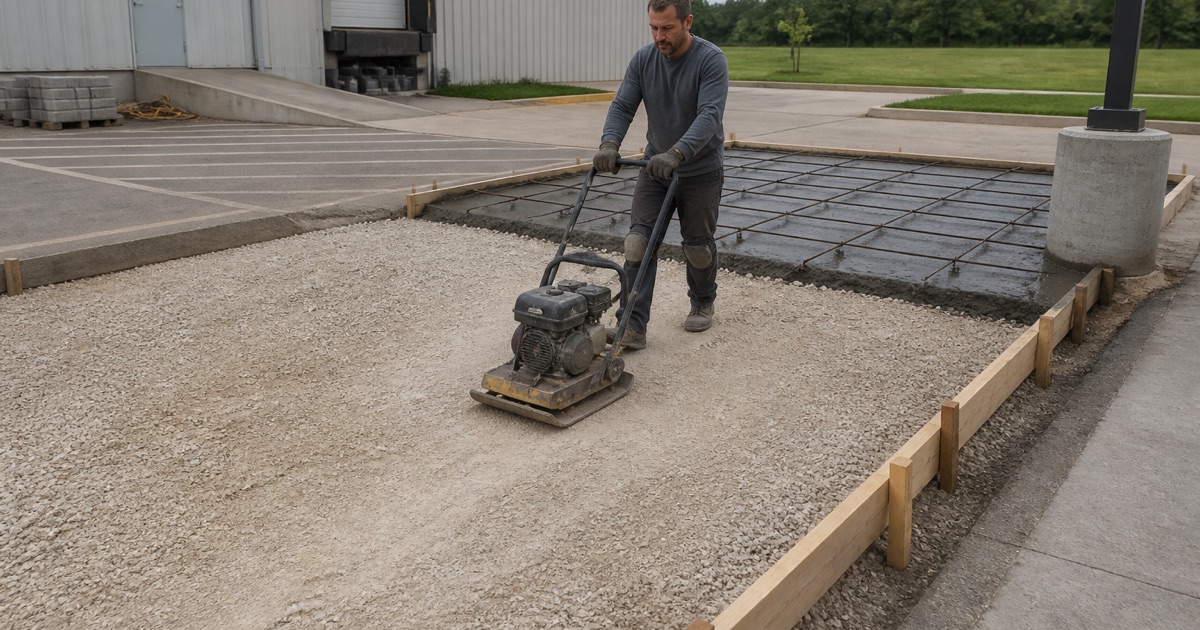
Parking Lots and Drive Aisles
Concrete pavement in a parking lot is built as a section rather than a slab: subgrade, base, thickness, reinforcing and jointing chosen for the vehicles that will use it, with heavier detail at entrances and turning movements where loads concentrate. We build the approved section rather than a lighter one that looks identical on day one. The difference shows up as rutting and panel breakup at the entrance within a few years.
Curb, Gutter, Wheel Stops and Bollards
We build COA 430-2 reinforced curb and gutter, set wheel stops where vehicles need a defined limit, and install bollards protecting storefronts, utilities and equipment that vehicles can reach. Protection is cheapest as part of the original layout. Bollards installed after a storefront has already been struck cost more, sit where the damage happened rather than where risk is, and never look planned.
Dumpster Pads and Loading Areas
A dumpster pad carries a front-loading truck’s concentrated axle load plus the abrasion of a steel container dragged across it, so it is built thicker and more heavily reinforced than the surrounding lot rather than to match it. Loading areas take the same treatment. A pad poured to parking-lot section fails at the container corners first, and by then the surrounding pavement is usually damaged as well.
Accessibility and Public Interface
Accessible Routes and Curb Ramps
An accessible route has to hold running slope and cross slope within tolerance from the parking space to the entrance, with curb ramps and a detectable warning surface where it meets vehicle areas, following PROWAG. We survey with instruments and verify before and after the pour. Tolerance here is genuinely tight, and a ramp slightly outside it is removed and rebuilt rather than accepted with a note.
Barriers Review and Larger Projects
Larger commercial projects can trigger TDLR architectural barriers review, which brings accessibility into the formal approval path rather than leaving it to site judgment. We build to the reviewed drawings and coordinate with the design team on the concrete elements. Finding an accessibility problem at final inspection is one of the most expensive outcomes on a commercial site, because it is discovered when everything else is complete.
Sidewalks, Crossings and Public Frontage
Frontage work sits in the right of way and is built to the adopted standard details rather than to a private specification, including the COA 432S-1 sidewalk detail. We handle the permitting and the inspection interface for that portion. Frontage is also the part of a project the public sees first, so the finish and the joint layout are worth the extra care they take.
Site Development, Drainage and Approaches
Site Development Permits and Approved Plans
Commercial work generally moves into site development review, so drainage, paving sections and accessibility arrive in one submittal rather than as separate conversations. We build to the approved plans and keep an updated registration on file with Leander Building Permits and Inspection, which the city requires of every general contractor and subcontractor and charges nothing for. Deviating from an approved plan on site is not a shortcut available to us.
Commercial Driveway Approaches
A commercial approach is built to COA 433S-2 as drawn, with a uniform two percent slope inside the right of way, and the concrete follows the mix the specification prescribes rather than the contractor’s preference. Water standing at the street is the defect the city makes a contractor rebuild at its own expense. On a reconstruction we keep at least half the driveway open at all times.
Drainage, Grading and Where Water Goes
Pavement is a drainage structure as much as a driving surface, so we build the falls, the collection points and the outfalls in the approved plan rather than approximating them. Ponding in a parking lot is not only a nuisance; standing water accelerates failure of the pavement it sits on and of the base beneath it. Grades are set with instruments and checked before the pour.
Working Around a Trading Business
Phasing, Access and Keeping the Site Open
We phase commercial work by area so access, deliveries and parking keep functioning throughout, and we agree the sequence and the closure windows before mobilizing. That plan is worth more to most clients than a slightly shorter overall program. A project that finishes a few days sooner but closes the wrong entrance during a busy week costs the business far more than it saved.
Permitted Hours and Inspector Coordination
We work the hours the approved plans allow, which means nothing overnight and nothing on a weekend without the inspector’s approval arranged four days ahead. Where a schedule genuinely requires out-of-hours work, we raise it early enough to be arranged properly. Inspection points are booked into the program rather than chased, so a pour is not waiting on a visit that was never scheduled.
Cure Time, Reopening and Handover
Concrete gains strength over time rather than on the schedule the surface suggests, so we give you dated reopening times for each phase and hold to them. Returning traffic to a young slab is the fastest way to damage work that met every other requirement. At handover we walk the site, confirm falls and tolerances and hand over the record of what was built.
- 20+ Years in Concrete
- Licensed & Insured
- Free Estimates