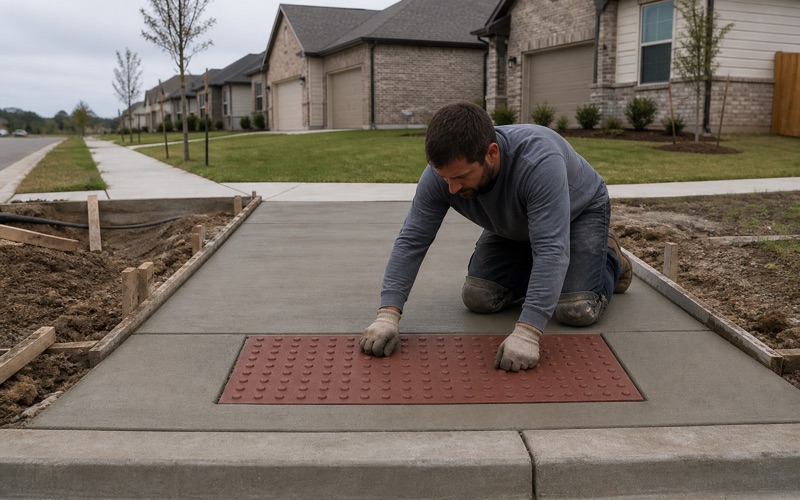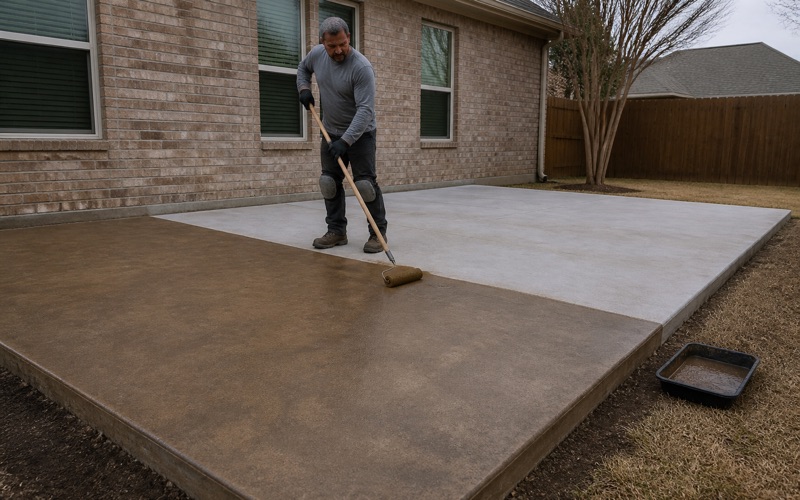
Leander Elite Concrete works as a concrete contractor in Manor, TX, building driveways, approaches, patios, walks and slabs with more than 20 years of experience behind the work. Driveway work in the right-of-way here runs through an unusual authority, and it changes both the timeline and who is allowed to carry it out.
Section 3.08.001(a) provides that it is unlawful for any person to construct, reconstruct or repair any driveway or work incident to it in the right-of-way of the streets or alleys of the city without first having obtained a permit for such work from the city council. Not from a counter, not from a department: from the council.
Two further provisions follow from that. The permit may not be assigned, transferred or sublet, and the permittee must remain in personal charge of all work done under it. Together those make the permit a personal authorization rather than a document attached to a job.
A Permit Granted by a Council, Not Issued at a Counter
What That Changes About the Schedule
A council grants permits on a meeting cycle rather than on a review queue, so the timeline is set by when the council next sits and by when an item can be placed before it. That is a different kind of wait from a plan review, and it is not one that can be shortened by submitting a better application. We build that cadence into the program from the first conversation.
A client planning around a start date needs to know that the gate is a meeting rather than a desk, because the two behave completely differently when a date slips. A missed review adds days; a missed meeting adds a cycle, and there is no mechanism for buying that time back.
Getting on the Agenda Properly
Because the item has to reach a council, the application has to be complete and clear well ahead of the meeting rather than at the point of submission. Anything that causes an item to be held over costs a full cycle rather than a few days. We prepare submittals to be understood by people reading them once, and we submit early enough to absorb a question.
That is ordinary diligence anywhere and it is worth considerably more here than in a jurisdiction where a correction can be resubmitted the same week. It also means we would rather hold a submittal back for a few days to complete it properly than lodge something incomplete against an approaching date.
The Scope of the Requirement
The provision covers construction, reconstruction and repair, and it reaches work incident to a driveway rather than only the driveway slab itself. A repair in the right-of-way is therefore permitted work in the same way a new approach is. We do not treat a small repair as though it sits outside the requirement.
The ordinance does not draw that line, and work done in the right-of-way without a permit is subject to summary removal, which is a substantially worse outcome than a wait. Summary removal also falls on the property rather than only on whoever did the work, which is why we would rather have the conversation about timing before we start than after.
Looking for concrete-contractor closer to Marble Falls? See Marble Falls Concrete-Contractor.
Why the Permit Cannot Be Passed to a Sub
Non-Assignable, Non-Transferable, Non-Sublettable
Subsection (b) bars assignment, transfer or subletting of the permit and requires the permittee to remain in personal charge of all work done under it. That is unusually strict language and it is aimed squarely at a common industry practice. In many places a permit is pulled by one party and the work is carried out by another, sometimes several layers removed.
Here that arrangement is prohibited rather than discouraged, so the party holding the permit has to be the party doing the work. That is worth a client checking directly, because the arrangement is common enough elsewhere that a contractor may propose it here without realizing it is not available.
What Personal Charge Means in Practice
Remaining in personal charge is a continuing obligation rather than a formality at the start. It means the permit holder is present and responsible for the work as it proceeds, not merely named on a document filed weeks earlier. We hold our own permits and run our own crews on this work rather than passing it down. That is how we would prefer to work regardless, and here it is what the ordinance requires rather than a preference we happen to hold.
Why the Rule Exists
A permit that can be sold or handed on separates the party who was assessed from the party doing the work, and the assessment then means very little. Keeping the two together is what makes the permit a meaningful check rather than a receipt. For a client, the useful question to ask any contractor here is simply who will hold the permit and who will be on site. If those are different parties, the arrangement does not satisfy the ordinance regardless of how the paperwork is arranged.
Material Inspected Before It Goes In, Not After
The Approval Requirement
Subsection (d) provides that no material shall be used until it has been inspected and approved by an authorized city representative, and that unapproved material is removed at the permittee’s expense. That places the check ahead of the work rather than after it. It is a genuinely different sequence from most inspection regimes, which look at completed or partly completed work. Here the material itself is examined before it is incorporated, which means delivery and inspection have to be coordinated rather than assumed.
Scheduling Around a Material Inspection
Coordinating a material inspection with a concrete delivery is a real scheduling problem, because concrete has a limited working window once it is loaded. We plan deliveries around the inspection rather than hoping the two coincide. That means confirming the inspection before ordering rather than ordering and then arranging it.
A load that arrives ahead of an approval is a load that either waits, which it cannot do indefinitely, or gets used without the approval the ordinance requires. Neither is acceptable, so the practical answer is to treat the approval as the trigger for the order rather than as a step running alongside it.
The Cost of Getting It Wrong
The ordinance puts removal of unapproved material at the permittee’s expense, which makes the consequence explicit rather than discretionary. That is a strong incentive to sequence the work properly, and it is the right incentive. We would rather lose half a day to a scheduling constraint than place material that has not been approved.
Removing cured concrete from a right-of-way is expensive, disruptive to the street and entirely avoidable. It also closes an access that the property depends on for as long as the replacement takes, which is usually the part a client minds most.
The Right-of-Way Specification Behind All of It
Backfill in Six-Inch Layers
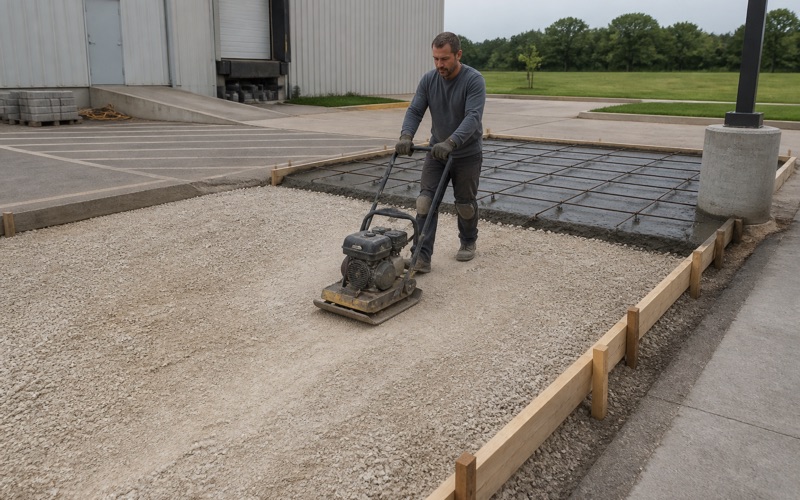
Trench backfill in the right-of-way is to be placed in six-inch layers, which is a compaction specification rather than a filling instruction. Placing material in thin lifts is what allows it to be compacted through its full depth rather than only at the surface. We compact each lift as it goes in rather than filling a trench and rolling the top.
Backfill compacted only at the surface settles later, and settlement under flatwork in the right-of-way shows up as a dip that has to be reinstated. Because that reinstatement is itself work in the right-of-way, it draws the same permit requirement as the original job, so getting the backfill right the first time avoids a second trip through the whole process.
Building the Approach to Be Inspected
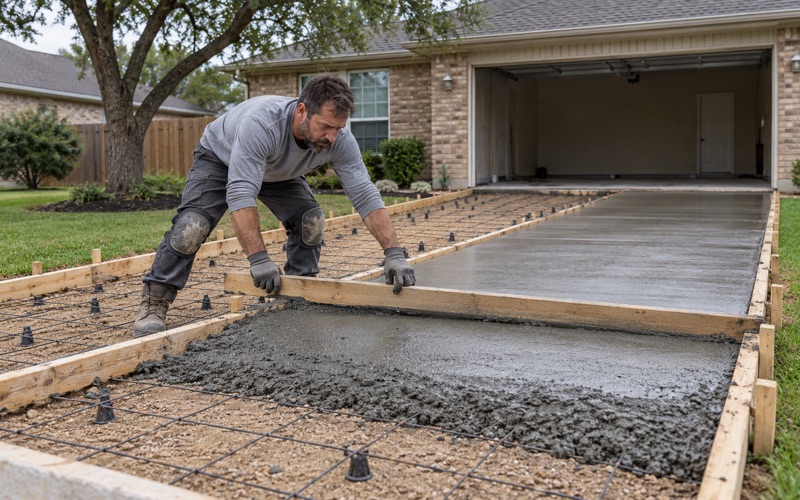
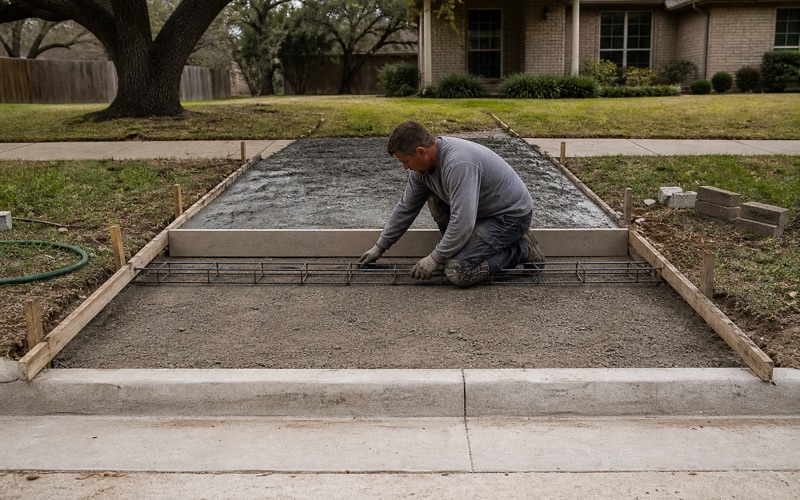
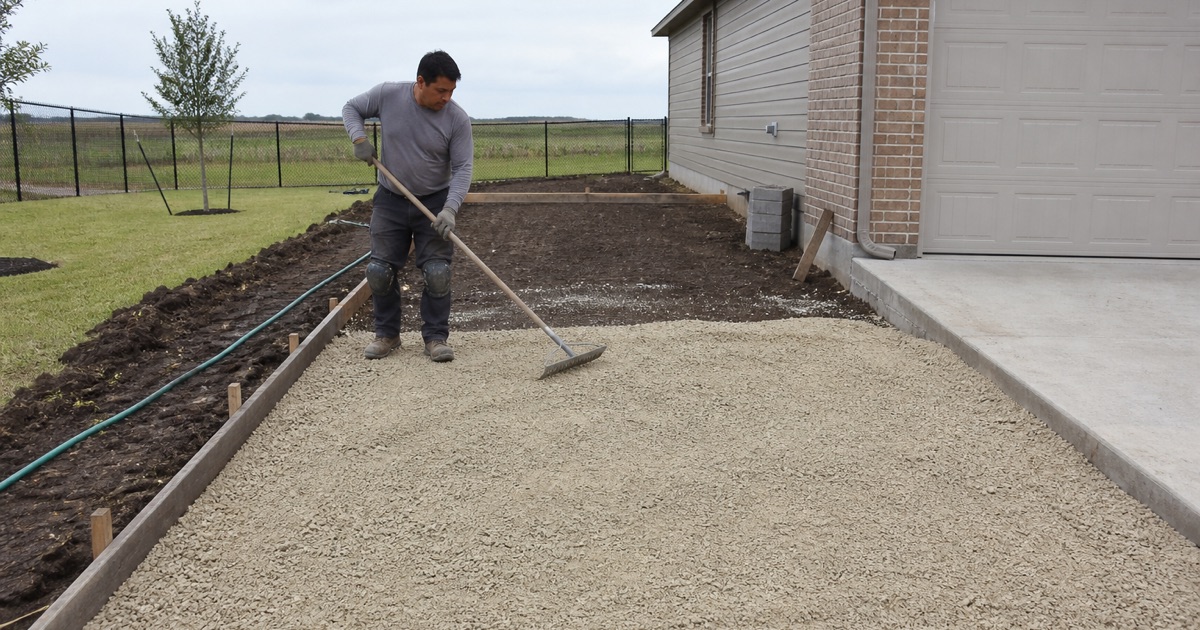
Because the checks here sit ahead of and during the work rather than at the end, the work has to be built to be looked at. Forms set to the surveyed line and grade, reinforcing correctly positioned and supported, and a subgrade genuinely ready rather than tidied on the morning of a visit. That is how we build regardless, and it happens to suit this process well.
Work prepared for inspection at each stage passes at each stage, and nothing about the finished surface has to be taken on trust. It also keeps the crew’s own standards honest, since anything built to be examined tends to be built better than anything built to be covered up.
Working in a Fast-Growing Suburb
Manor is a city in Travis County located 12 miles northeast of Austin and part of the Austin-Round Rock metropolitan area, with a population of 13,652 at the 2020 census. It was the seventh fastest growing suburb in America in 2018 by Realtor.com and the 17th best small suburb to live in by U.S. News and World Report in 2019.
Growth at that pace puts a great deal of new access work into the right-of-way at once, which is exactly the work this ordinance governs. We plan our jobs here around the council cycle, the personal-charge requirement and the material approval as a matter of course, because all three are predictable once you know they exist and disruptive when you do not.
- 20+ Years in Concrete
- Licensed & Insured
- Free Estimates